

Hysteroscopy vs. Hysterectomy: Differences, Procedure & Recovery Explained
 By Chitra Shankar
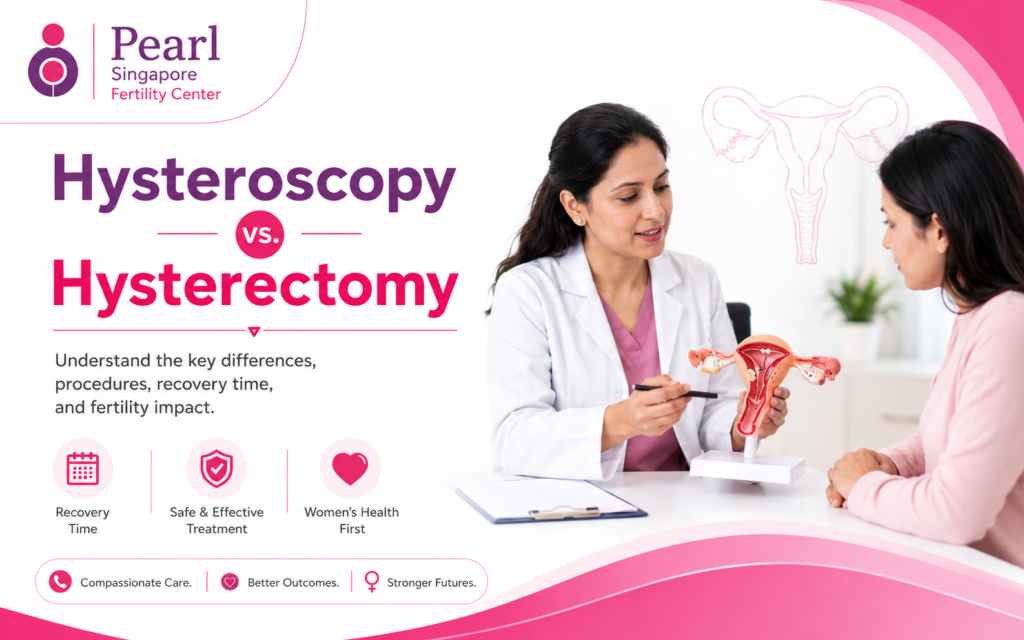
Hearing unfamiliar medical terms during a gynaecology consultation can be confusing, especially when they sound almost identical. Hysteroscopy and hysterectomy are a common example.
A hysteroscopy is a minimally invasive procedure used to examine and sometimes treat problems inside the uterus without removing it. A hysterectomy, on the other hand, is a surgical procedure that removes the uterus altogether. Both procedures involve the same organ, but they are meant for different situations.
In Chennai, most women come across one of these two procedures after being diagnosed with fibroids, abnormal bleeding, polyps or endometriosis, or during an infertility workup. The two terms get used so loosely that people often leave a consultation more confused than when they walked in and end up searching for hysterectomy surgery in Chennai without knowing whether they actually need it.
Below is a simple breakdown of what each procedure actually does, how they’re different, what recovery looks like in real terms, and how doctors decide between the two.
Hysteroscopy vs. Hysterectomy at a Glance
Here’s a quick side-by-side look:
Feature |
Hysteroscopy |
Hysterectomy |
| Purpose | Diagnoses and treats problems inside the uterus | Removes the uterus |
| Major Surgery | No | Yes |
| Hospital Stay | Usually same day | 2-5 days |
| Recovery | 1-7 days | 4-8 weeks |
| Fertility | Preserved | Pregnancy is no longer possible |
| Anaesthesia | Local or general | General |
This table is only meant to give you a rough idea, not a final answer. Anyone comparing hysterectomy surgery in Chennai with a less invasive option should still get proper imaging done and speak to our doctors before deciding anything
What Is a Hysteroscopy?
A hysteroscope is a thin, lighted scope that’s passed through the vagina and cervix into the uterus (no cutting or external incision is involved). The doctor can see the inside of the uterus directly on a screen and treat whatever is found in the very same sitting.
There are basically two types.
- A diagnostic hysteroscopy is only meant to look inside and figure out the problem, like unexplained bleeding, suspected polyps, scarring, and so on.
- An operative hysteroscopy goes a step further, using small instruments through the same scope to remove polyps, shave down fibroids, or clear scar tissue, all without opening the abdomen at all.
Doctors reach for it when investigating abnormal bleeding, suspected polyps or fibroids inside the uterine cavity, recurrent miscarriage, or infertility. The procedure itself runs 15 to 30 minutes, and most women are home within a couple of hours, with minimal blood loss and little more than mild cramping afterwards.
What Is a Hysterectomy?
A hysterectomy is the surgical removal of the uterus, and it comes in a few different forms.
- A partial (or subtotal) hysterectomy removes the uterus but leaves the cervix behind.
- A total hysterectomy removes both the uterus and the cervix.
- A radical hysterectomy goes further still, removing surrounding tissue and sometimes part of the vagina. This is reserved almost exclusively for cancer cases.
Surgeons also choose between three approaches.
- Laparoscopic (small cuts and a camera)
- Vaginal (no external incision at all)
- Abdominal (a larger open cut for bigger uteruses or complicated cases).
The choice comes down to uterus size, any prior surgery, and what’s actually being treated. It’s a permanent step, and it’s major surgery too, which is exactly why it’s usually the second option, not the first.
What Conditions Can Be Treated with Each Procedure?
Conditions commonly treated with hysteroscopy
- Uterine polyps.
- Small fibroids located inside the uterine cavity.
- Scar tissue, including Asherman’s syndrome.
- Abnormal uterine bleeding.
- Retained tissue after a miscarriage or delivery.
- Infertility evaluation to check the shape and lining of the uterus.
Conditions commonly treated with hysterectomy
- Large fibroids causing significant symptoms
- Adenomyosis
- Endometriosis that hasn’t improved with other treatment
- Uterine prolapse
- Chronic heavy bleeding that hasn’t settled with medication or hysteroscopic treatment
- Certain gynaecological cancers
A good number of patients who come looking for hysterectomy surgery in Chennai actually have a condition that fits the first list above. That said, patients with adenomyosis or advanced endometriosis often do end up needing hysterectomy surgery in Chennai once the other treatments have already been tried.
Hysteroscopy vs. Hysterectomy: Key Differences Explained
Purpose: Hysteroscopy treats problems inside the uterus. Hysterectomy removes the whole organ.
Procedure: Hysteroscopy is done through the natural passage of the cervix. Hysterectomy needs laparoscopic, vaginal, or abdominal surgical access.
Incisions: None, in the case of hysteroscopy. Hysterectomy involves small laparoscopic cuts, an abdominal incision, or none at all if done vaginally (though surgical entry into the pelvis is still required either way).
Hospital Stay: Same day for hysteroscopy. Two to five days for hysterectomy, sometimes longer for abdominal cases.
Pain and Discomfort: Hysteroscopy usually causes mild cramping that settles within a day or two. Hysterectomy involves post-surgical pain that’s managed with medicines for about one to two weeks.
Recovery Time: One to seven days for hysteroscopy. Four to eight weeks for hysterectomy, depending on the surgical approach used.
Fertility: Hysteroscopy usually keeps fertility intact and can even improve it by clearing blockages. Hysterectomy ends the possibility of pregnancy for good.
Risks and Complications: Hysteroscopy’s risk is fairly low overall. Hysterectomy carries higher risk, including infection, bleeding, and anaesthesia-related complications, along with a longer recovery period. Any surgeon offering hysterectomy surgery in Chennai should be explaining these risks properly before scheduling anything.
What Happens During Each Procedure?
During a Hysteroscopy
Anaesthesia can be local or general, depending on how complex the case is. The hysteroscope goes through the vagina and cervix into the uterus, with no cut made anywhere on the outside. The doctor checks the uterine lining directly and, if something needs fixing, does it right there using small instruments passed through the scope.
During a Hysterectomy
A hysterectomy is done under general anaesthesia. The uterus is removed through a laparoscopic, vaginal, or abdominal approach, chosen based on its size and the underlying diagnosis.
Once it’s out, the surgical site is closed and the patient moves to recovery for monitoring and pain control. This immediate post-op routine looks fairly similar across hospitals offering hysterectomy surgery in Chennai; what varies is how long you’ll actually stay, which depends on the approach used.
Recovery After Hysteroscopy vs. Hysterectomy
This is where the two procedures really differ.
Hysteroscopy
After a hysteroscopy, most women are back to feeling normal within a few days. A little cramping and light spotting is expected, over-the-counter pain relief usually does the job, and many women go back to work within one to three days.
Light exercise can start again within a week, and driving is usually fine the very next day once the anaesthesia has fully worn off.
Hysterectomy
After hysterectomy surgery in Chennai, recovery is counted in weeks, not days. Prescribed medicines manage the pain for the first one to two weeks. Some bleeding or discharge is normal for a few weeks afterwards.
Most women take two to six weeks off work, depending on the type of job and the surgical approach, with driving and exercise restricted for two to four weeks, and sexual activity paused for about six weeks.
Risks and Possible Complications
Both procedures carry some risk, though not to the same degree. Infection and bleeding are possible with either one, but they’re much less common with hysteroscopy, given how minimally invasive it is. Anaesthesia-related risks apply to both, especially when general anaesthesia is used.
Injury to nearby organs is rare, but it’s a known risk with hysterectomy surgery in Chennai given the surgical access involved. Blood clots are also more common after hysterectomy surgery in Chennai than after hysteroscopy, mostly because of the longer recovery time and reduced movement that follows. Rare complications include uterine perforation during hysteroscopy or delayed wound healing after hysterectomy.
How Do Doctors Decide Which Procedure Is Right?
There’s no fixed formula here. Doctors carefully consider age and future pregnancy plans when making their recommendation. Hysteroscopy is almost always preferred when fertility needs to be preserved. The exact diagnosis and how severe it is also matter a lot.
What’s already been tried counts too. If medicines and hysteroscopic treatment haven’t managed to fix the bleeding or pain, then hysterectomy surgery moves up as an option.
Doctors also consider cancer risk, overall health, and the results of tests such as an ultrasound or MRI. If you’re considering hysterectomy surgery in Chennai, your doctor will usually perform a thorough evaluation before recommending surgery.
Can a Hysteroscopy Help You Avoid a Hysterectomy?
Often, yes. Polyps, small fibroids inside the cavity, scar tissue, and some cases of abnormal bleeding can all be fully treated with a hysteroscopy. For quite a few women, it turns out to be the first and only step needed.
But it’s not a fix for everything. Large fibroids sitting outside the uterine cavity, advanced adenomyosis, and cancer are not things a hysteroscope can treat, and trying it anyway in these cases just delays a proper referral for hysterectomy surgery.
When Should You See a Gynaecologist?
Some symptoms shouldn’t be ignored or left for a routine check-up, whether or not they eventually lead to hysterectomy surgery in Chennai: heavy or prolonged periods, bleeding after menopause, persistent pelvic pain, known fibroids, repeated miscarriages, difficulty in conceiving, or abnormal uterine bleeding that keeps coming back.
Women in Chennai noticing any of these symptoms shouldn’t sit on them for too long. Getting checked early by a qualified gynaecologist is often what makes the difference between a simple hysteroscopic fix and a more complicated case later on.
Conclusion
So, to put it simply, hysteroscopy and hysterectomy are not the same thing, even though people often mix them up. Hysteroscopy is the gentler option. It goes inside the uterus, fixes the problem, and lets you keep your uterus. Hysterectomy is a bigger surgery where the uterus is removed, and it’s usually done only when nothing else has worked or the condition is serious.
Neither one is “the better one” in general. It all depends on what’s going on with you (your diagnosis, your age, your health, and whether you’re planning to have children later).
Please don’t decide anything just because it worked for your neighbour or your cousin. Every case is different, so it’s best to get a proper check-up and talk to a good doctor before deciding anything.
If you’re in Chennai and trying to figure out your options, including hysterectomy surgery in Chennai, the team at Pearl Singapore Fertility Centre (PSFC) can guide you. Beyond hysteroscopy and hysterectomy, the team also handles laparoscopy and fertility treatments like IVF and IUI, so if preserving fertility is part of your decision, that’s covered under one roof.
Frequently Asked Questions
- Is hysteroscopy a major surgery?
No, not at all. It’s minimally invasive, usually done the same day, with no cuts on the outside. Most women go home within a few hours and recover within a week. - Is hysterectomy always necessary for fibroids?
No. Small fibroids inside the uterine cavity can often be removed through hysteroscopy itself. Hysterectomy surgery in Chennai is usually kept for large, recurring, or symptomatic fibroids that haven’t responded to other treatment. - Is hysterectomy always necessary for fibroids?
No. Small fibroids inside the uterine cavity can often be removed through hysteroscopy itself. Hysterectomy surgery in Chennai is usually kept for large, recurring, or symptomatic fibroids that haven’t responded to other treatment. - Can I get pregnant after hysteroscopy?
Yes, in most cases you can. Hysteroscopy usually preserves fertility and can even improve it by clearing out polyps, scar tissue, or fibroids that were affecting implantation. This is one reason doctors try it before considering hysterectomy surgery in Chennai. - How painful is a hysteroscopy?
Most women describe it as mild to moderate cramping, quite similar to period pain. It usually settles within a day, and over-the-counter pain relief is enough for most people. - How long does hysterectomy recovery take?
Usually four to eight weeks for hysterectomy surgery in Chennai. It depends on whether the surgery was laparoscopic, vaginal, or abdominal. - Which procedure is safer?
Hysteroscopy is safer overall, simply because it’s less invasive. Hysterectomy surgery in Chennai is safe too, but since it’s major surgery, the risks of infection, bleeding, and a longer recovery are naturally higher. - Can hysteroscopy prevent a hysterectomy?
Often, yes. When the problem is limited to the uterine cavity, it can resolve it completely and remove the need for a hysterectomy altogether. - How do I know which procedure is right for me?
It really comes down to your diagnosis, how severe your symptoms are, your age, and whether preserving fertility matters to you. A proper evaluation with imaging and a consultation is the only reliable way to know, especially before deciding on something as significant as hysterectomy surgery in Chennai.Key Takeaways
- Hysteroscopy treats problems inside the uterus without removing it; hysterectomy removes the uterus entirely.
- Hysteroscopy is a same-day, minimally invasive procedure with recovery measured in days; hysterectomy is major surgery with recovery measured in weeks.
- Fertility survives a hysteroscopy but ends with a hysterectomy.
- Polyps, small fibroids, and scar tissue are usually manageable through hysteroscopy alone.
- Hysterectomy surgery in Chennai is generally reserved for conditions that are severe, recurring, unresponsive to treatment, or cancerous.
- A proper diagnostic work-up should always come before deciding on hysterectomy surgery in Chennai.

