28 Weeks Pregnant: Symptoms, Baby Size & Third Trimester Changes
 By Chitra Shankar
Are you waiting for someone? Yes the little one you have been dreaming of for 28 weeks now. You are going through many changes in your body, following regular checkups, taking care of your baby and being curious about your baby’s growth. Do you want to know how your baby looks and what condition your baby is in? This 28-week pregnancy guide provides the information that you need regarding the baby, its weight, your body changes, symptoms, and do’s and don’ts during your pregnancy.
What Does a 28-Week Pregnancy Feel Like?
- You will undergo many physical changes in your body. Stretch marks will appear on your tummy, abdomen, breasts, hips and thighs.
- You may experience feelings of indigestion and heartburn. These changes are due to the hormones and the baby’s growth.
- Swelling of face, feet and ankles, particularly during the summer.
- Skin pigmentation can appear.
- You can feel tingling leg pain, also called sciatica, because the baby is settling in a position with their head down for birth. Occasionally the pain can be severe.
- Frequent urination is due to the pressure of the baby on the pelvic region and the bladder.
- Shortness of breath occurs due to pressure from the baby near ribs and lungs.
- Weight gain around 7.7 to 10.8 kg can be observed.
- Bending and squatting can be a difficulty.
- A kind of breast milk that looks clear to yellowish will be produced. This fluid is thick. This secretion is produced because your body is getting ready to produce the milk.
- Some people can experience sensitive skin even if they have not encountered it. This is because of the hormones; they become sensitive, dry and flaky. So, products with additives, fragrances, and dyes can be avoided. Detergents, sunlight, heat, chlorine and some foods can also cause sensitive skin at this time.
- At this time, you may face not only physical but also emotional difficulties.
- Braxton Hicks contractions can be experienced at this stage. These are false labour contractions, but they feel like real ones. They can last between 30 and 90 seconds. This phenomenon is normal in pregnancy as your body adapts and practises for labour.
28 Weeks Pregnant Symptoms
- Sleeping trouble due to hormones or nerves.
- Shortness of breath due to the pressure given by the baby and the crowding of the lungs and diaphragm.
- Bloating and gas issues can occur due to the pressure of the foetus on your rectum.
- Heartburn can be caused by the pressing of the uterus on your stomach, which causes the upward flow of stomach acids.
- Blood flow in the mucous membrane of the nose increases due to the rise in progesterone and oestrogen levels. This increase will result in swelling of the mucus membranes and cause snoring.
- Due to the bulge in the belly, a tension is created in the blood vessels and results in a reduction of blood flow. Such pressure can cause dizziness.
- Spider veins on the arms and face or varicose veins on the thighs can occur due to the increase in blood volume, which causes swelling in the veins.
- Haemorrhoids can be caused due to swollen veins in the rectum.
- Gums can bleed because they get inflamed and irritated due to hormones.
- You can also face issues like hyperpigmentation. It can cause dark or brown patches on your face, known as melasma, or a dark line in the centre of your tummy.
Your Baby’s Growth: Foetal Development at Third Trimester
- When you are 28 weeks pregnant, the baby starts to develop fat. As a result, their wrinkly skin becomes smooth. They will start looking rounder due to the fat.
- Their lungs are maturing at this stage to survive in the outside environment.
- The baby’s brain starts developing and becoming a complex organ. The brain will start developing grooves on its surface.
- Hair growth continues on the head, and eyebrows and eyelashes appear. Your baby’s eyelids will open, and eyes can move.
- The baby’s weight continues to increase. Organs like the brain, kidneys and lungs keep growing.
- At this stage of development, babies acquire the ability to cry. Hence, babies can cry before their birth.
- They can hear noises, blink and sense light. Their brain and senses start working
Baby Size
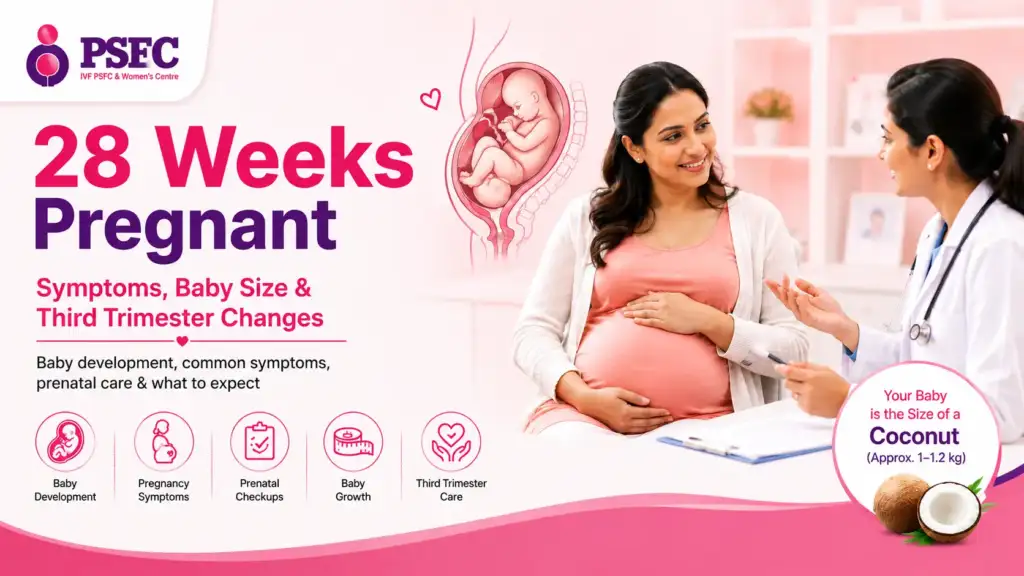
- The baby is the size of a coconut or an aubergine.
- Your baby is around 36 cm long from head to heel and weighs around 1 to 1.2 kg.
- The weight gain is rapid at this stage and continues to double.
What to Do?
- Follow a healthy diet throughout your pregnancy. The diet should include fruits and vegetables along with protein, calcium and iron-containing foods.
- Drinking plenty of water is necessary during this time because it can prevent false labour, as Braxton Hicks contractions are related to dehydration.
- Staying active, even at 28 weeks pregnant, is important because it can help reduce lower back pain and prepare your muscles for labour.
- Safe and gentle exercises can help the pregnancy without complications.
- Pelvic floor exercises are important, as they can aid postpartum recovery.
- Sleep on your side, bend your knees and place a pillow between them. This can make you feel comfortable.
- Sleeping with the head elevated through a pillow can reduce snoring and heartburn.
- Sitting in a posture by relaxing your shoulders and keeping your elbows close to your body can ease you.
What Not to Do?
- When you are 28 weeks pregnant, lying on your back can put pressure on blood vessels, which can reduce blood flow to the womb, limiting the oxygen supply to the baby. So, avoid lying on your back.
- Avoid sport activities, scuba diving and exercises involving lying supine for long periods.
- Do not stand for a longer period of time. If you have to stand, keep your feet slightly apart.
- Do not ignore the foetal movements and always note if there is any slowdown in the kicks.
- Avoid unpasteurised foods, such as some dairy, raw seafood, and high-mercury fish, for safety reasons.
- Notice the symptoms like pelvic pressure, regular contractions, menstrual-like cramps and watery discharge, and do not ignore it.
- Do not lift heavy weights because it can stress your back and abdominal muscles, increasing the risk of injury.
Pregnancy Tests
- Pregnancy tests at 28 weeks include prenatal tests, such as screening tests and diagnostic tests. Prenatal tests are not mandatory, but if the doctor recommends it, they can be performed.
- Lab tests along with weight and blood pressure will be checked. This test is to check if you have gestational diabetes, which is a type of diabetes that can cause health issues for the baby, or a risk of pre-eclampsia, which is high blood pressure.
- Ultrasound waves show the image of the baby, its shape and position in the uterus.
- Glucose screening will be performed to check for gestational diabetes and should be treated early.
- Amniocentesis is the test where a sample of amniotic fluid is tested for genetic conditions, structural defects and chromosomal problems.
- A nonstress test can be performed by the doctors, which can check the changes in the baby’s heartbeat or for belly tightening.
- Blood tests like the Rh factor can be checked if you have an Rh-negative blood type.
When to Seek a Doctor
Seek a doctor if you face:
- Severe abdominal cramps
- Painful contractions or water breaking, which are signs of preterm labour
- Severe vomiting and nausea
- Severe headaches
- Dizziness
- Change in foetal movement, such as a decrease in movement.
- Vaginal bleeding
- Leaking fluid
- Burning sensation, pain or difficulty in urinating
- Blurring of vision
- Cramping in legs, arms and chest
Key Takeaways
- At 28 weeks pregnant, your body undergoes changes like weight gain, stretch marks on your tummy, hips and thighs, swelling, and sciatica.
- During this time, you may experience issues like heartburn, bloating, haemorrhoids, hyperpigmentation, sensitive skin, shortness of breath and sleeping trouble.
- Along with your body changes, you can also observe the baby’s growth. At this stage, your baby can blink, cry, and have brain functions, while the lungs become mature for breathing and hair grows on the head. Your baby is about 36 cm long and weighs around 1 to 1.2 kg.
- Lab tests can be done if the doctor prescribes according to your condition.
- It is better to seek a doctor if you face any severe headache, nausea, dizziness or any uncontrollable pain.Curious what changed since last week? Go back to 27 Weeks Pregnant to see how far you’ve come.Ready to find out about ovulation, fertilization, and the very first signs of development?Continue to 29 Week Pregnant: Your Next Steps and What to Expect
Frequently Asked Questions
- What is a 28 weeks pregnant woman’s baby’s weight?
The baby weighs around 1 to 1.2 kg at this time.
- What to do for a healthy trimester pregnancy?
Follow a proper diet, including fruits and vegetables; drink plenty of water; do mild exercises; relieve your stress; and go for routine checkups.
- How is the baby’s development at 28 weeks?
Baby development at 28 weeks includes hair growth, maturation of lungs, an increase in weight, open eyes, hearing, and sensing.
- What is the list of pregnancy tests at 28 weeks?
The pregnancy tests include prenatal tests like screening and diagnostic tests like glucose screening, amniocentesis, blood tests like Rh factor and ultrasound scans.
- Can I skip exercising in 28 weeks of pregnancy?
Yes, you can completely skip exercising. Listen to your body. If you are not comfortable with exercising, you can stop it.
