

How to Choose the Right Fertility Clinic for Your IVF Journey
 By Pearl Editor
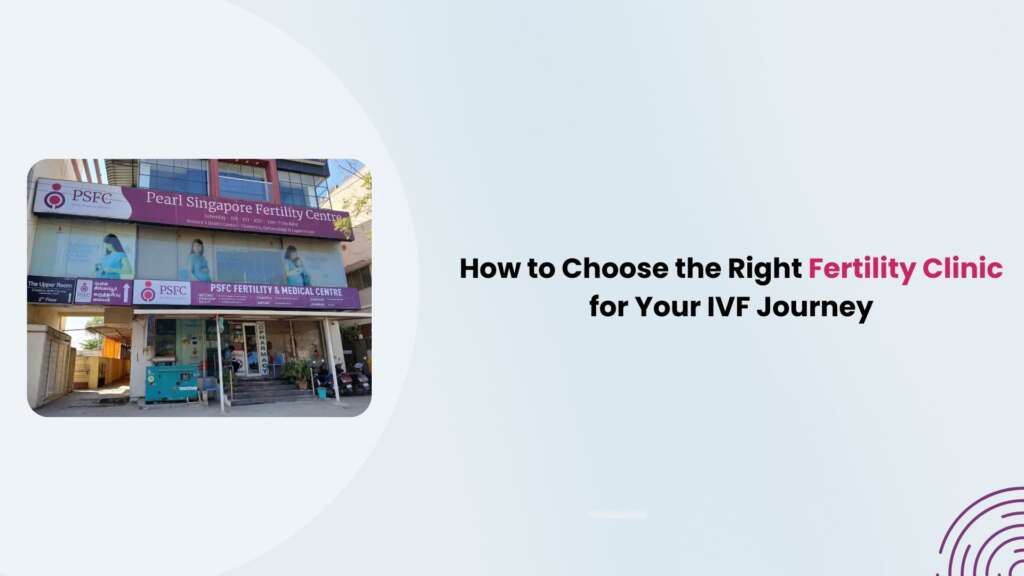
A Decision That Deserves Care
Choosing an IVF clinic is not a decision to be made quickly, based on proximity or a single headline statistic. It is one of the most consequential healthcare decisions you will make — one that will shape your experience, your emotional journey, and ultimately your chances of success.
At PSFC OMR, Chennai, we welcome couples to make this choice with full information. This guide explains what genuinely matters when evaluating a fertility clinic, and what questions to ask.
1. Success Rates — Ask the Right Questions
Success rates are the most prominent marketing tool in fertility medicine — and the most easily manipulated. Knowing how to read them is essential.
What to Look For
- Live birth rate per embryo transfer — not just ‘pregnancy rate’, which counts positive blood tests rather than babies born
- Success rates stratified by age group — national averages are meaningless for your individual situation
- Whether data is independently verified by a regulatory or accreditation body
Questions to Ask the Clinic
- What is your live birth rate for women in my age group?
- How many IVF cycles do you perform per year?
- What is your single embryo transfer rate?
- What is your freeze-all rate, and what are your frozen embryo transfer outcomes?
Be cautious of clinics that report only clinical pregnancy rates, do not stratify by age, or cannot provide verifiable data.
2. The IVF Laboratory — Where Outcomes Are Made
The quality of the embryology laboratory is the single most critical determinant of IVF outcomes. State-of-the-art clinical care cannot compensate for a suboptimal laboratory.
Key Laboratory Indicators
- Accreditation by a recognised body (NABH, ISO, or international equivalent)
- Use of vitrification for embryo and oocyte cryopreservation
- Time-lapse embryo monitoring for continuous, uninterrupted assessment
- Availability of Preimplantation Genetic Testing (PGT)
- Air quality management within the laboratory environment
- Embryo survival rate after thawing — a key quality indicator
💡 Tip: Do not hesitate to ask for a laboratory tour or to ask the senior embryologist about their systems. A clinic confident in its laboratory quality will welcome these questions.
3. The Clinical Team
Reproductive medicine is a specialist field. The training, experience, and ongoing professional development of the clinical team directly affect outcomes.
What to Consider
- Formal qualification in reproductive medicine (not simply general gynaecology)
- Experience with your specific diagnosis — whether PCOS, endometriosis, recurrent miscarriage, male factor, or unexplained infertility
- Involvement in the clinical community — research, conference participation, peer-reviewed publications
- Consistency — will you be managed by the same specialist throughout your treatment, or rotated between different doctors?
4. Personalised vs. Protocol-Driven Care
The best fertility care is individualised. Blanket protocols applied regardless of patient-specific factors are a red flag. Evaluate whether:
- Your initial consultation involved a thorough review of your full medical history and investigations
- The proposed treatment plan explains why specific approaches are recommended for your case
- Your specialist adjusts protocols based on your response — not simply following a fixed template
- You feel genuinely heard during consultations, rather than processed through a system
5. Transparency and Communication
Fertility treatment involves ongoing uncertainty and multiple decision points. The way a clinic communicates — during good news and difficult news — is critical.
- Are your results explained clearly and in context?
- Is there a named point of contact for day-to-day queries?
- Does the clinic communicate proactively about any changes to your cycle, or do you have to chase for information?
- Are treatment costs explained transparently before treatment begins, with a clear breakdown of what is and is not included?
6. Emotional and Psychological Support
Fertility treatment is emotionally demanding. A clinic that recognises this and provides structured support — whether through in-house counsellors, referral pathways, or peer support connections — demonstrates a whole-person approach to care.
Access to psychological support should not be an afterthought or an optional extra. It is part of comprehensive fertility care.
Conclusion
The right fertility clinic for you is one that combines clinical excellence with transparent communication, genuine personalisation, and compassionate care. It is worth taking the time to visit more than one clinic before making your decision — and to trust your instinct about how you are treated as a person, not just as a patient.
At PSFC OMR, Chennai, we are committed to all of these principles and welcome you to discuss your care openly before you commit to treatment.
FAQs
Is the cheapest clinic always the worst choice?
Not necessarily, but cost cutting can reflect compromises in laboratory quality, staffing, or monitoring. The total cost of IVF should include cycle monitoring, medications, and potential frozen transfer cycles — not just the headline procedure price.
How important is the clinic’s proximity to my home?
Should I get a second opinion before starting IVF?
What should I look for in an initial consultation?
