

Testicular Sperm Extraction TESE Procedure in India: Steps, Success Rate, Recovery & Cost
 By Chitra Shankar
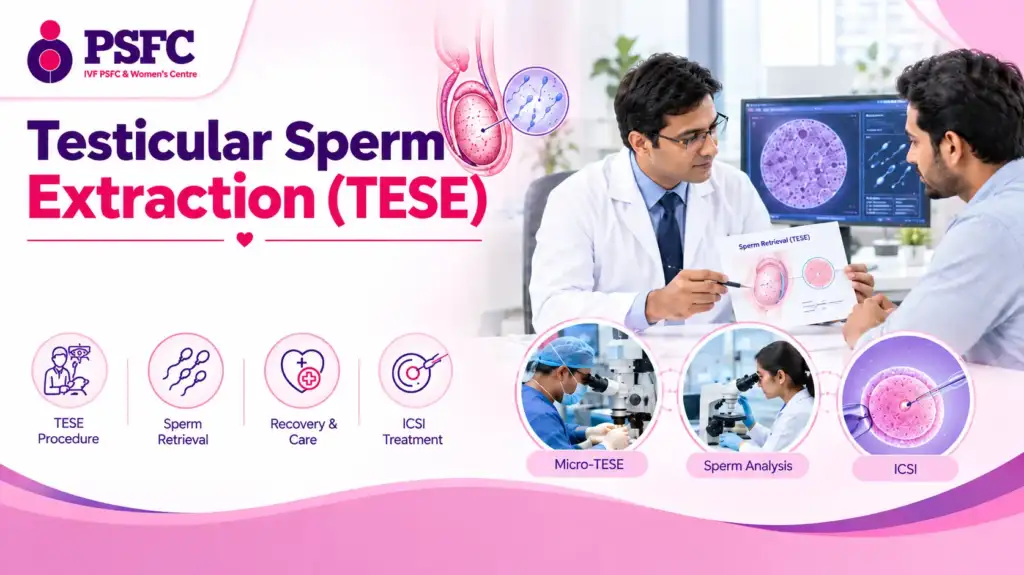
Testicular sperm extraction (TESE) is the process of removing a small tissue and extracting the sperm. The procedure involves reviewing medical history, performing tests, analysis and treatment, followed by sperm retrieval.
It takes one to two weeks for the recovery, and the success rates of TESE vary from 40 to 60% or more based on the medical condition. The costs of this procedure are between ₹20,000 and ₹100,000 based on the type of treatment, location, hospitals and facilities.
Medical review: Have this article medically reviewed and approved by Dr. Chitra Shankar MD (OG), MRCOG, DRM (Germany), FMAS, before publication.
What Is Testicular Sperm Extraction (TESE)?
Testicular Sperm Extraction (TESE) is the minor surgical process of extracting sperm from the testicles. A small incision is made to remove the testicular tissue, which is then analysed under a microscope for the presence of sperm. The removed sperm is then used for ICSI (intracytoplasmic sperm injection) treatment.
TESE vs micro-TESE vs TESA vs PESA
A common connection among these methods is that they can be employed for men affected with azoospermia. But the location of sperm collection and technique differ based on the obstructive and non-obstructive azoospermia.
- Obstructive azoospermia: The testicles produce sperm normally, but they will not be carried due to the blockage.
- Non-obstructive azoospermia: The testicles do not produce sperm or produce a low sperm count.
| Parameters | Testicular Sperm Extraction (TESE) | Micro TESE | Testicular Sperm Aspiration (TESA) | Percutaneous Sperm
Aspiration (PESA) |
| Procedure | Surgical incision removes testicular tissue | Use of a microscope to locate the sperm, followed by extraction | No incision made, thin needle directly extracts the tissue from the testicle. | Sperm collected from the epididymis |
| Surgical incision | Yes | Yes | No | No |
| Suitability for obstructive/non-obstructive cases | Obstructive | Non-obstructive | Obstructive | Obstructive |
| Sperm Yield | Moderate to high | high | Low to moderate | Moderate |
| Recovery | 1 to 2 days | 2 to 3 days | Few hours | Few hours |
Who Is Suitable for the TESE Procedure?
The TESE procedure is needed for:
-
Men with obstructive and non-obstructive azoospermia:
- Non-obstructive azoospermia could be due to genetic conditions, chemotherapy or previous infections.
- Obstructive azoospermia can occur due to injury, vasectomy or an infection.
-
Couples choosing ICSI or IVF due to low sperm count
- ICSI and IVF are the assisted reproductive methods employed when the sperm count is low.
- These methods will be performed after sperm extraction through TESE.
-
Patients undergoing pre-cancer and post-cancer treatments
- The cancer patients with azoospermia can face permanent sterility after the chemotherapy. TESE can be performed in such patients to store the sperm for the future.
- Cancer survivors with azoospermia can go for this treatment.
-
People who underwent TESA and PESA previously
- TESA and PESA are not surgical methods, and hence they cannot exactly identify the sperm.
- Testicular sperm extraction is a surgical procedure, and hence, viable sperm can be located and extracted.
Tests and Preparation Before TESE
Tests are performed before undergoing TESE to evaluate the cause of the infertility and avoid unnecessary treatments
- A semen analysis will be performed to confirm the diagnosis of azoospermia.
- Epididymis, testicular size and vas deferens will be examined through physical examination and scrotal ultrasounds.
- Past medical history will be reviewed.
- Current medications, treatments, infection risks and allergies will be analysed.
- Hormone tests will be performed to check the levels of testosterone, FSH and other hormones.
- Genetic testing like karyotype analysis, CFTR gene testing and Y-chromosome microdeletion testing can be performed to identify the cause of infertility.
- Your doctor will recommend that you maintain a healthy lifestyle through a balanced diet and exercise.
- Further, alcohol and smoking can be avoided.
TESE Procedure Step By Step
Step 1: Consultation
- Medical history and past surgeries will be reviewed.
- Semen analysis and testicular examination identify the cause of infertility.
- Imaging tests and scans can be performed.
Step 2: Anaesthesia
- Anaesthesia is of two types, including general and local.
- The type of anaesthesia administered will be based on the patient’s suggestion, doctor’s choice and the method of TESE.
Step 3: Surgery
- A small incision will be made in the scrotum.
- A small piece of testicular tissue will be removed.
- In case of micro-TESE, the microscope will determine the right location for tissue collection.
- The extracted tissue will be sent to the laboratory for analysis.
Step 4: Sperm identification and retrieval
- The viable sperm will be identified in the lab.
- Healthy and motile sperm will be selected from the tissue.
Step 5: Closure and dressing
- The small incision is closed by sewing with dissolvable stitches.
- Dressing is applied.
- The patient will be discharged on the same day.
Step 6: Post-operation
- Recovery can be faster, and normal activities can be continued.
- A mild swelling and discomfort can be experienced.
Learn how IVF treatment works at PSFC
What Happens to the Sperm: Freezing and ICSI
- The standard IVF is not preferred after TESE due to low sperm count and motility.
- Hence, ICSI is chosen, as it can directly inject the single sperm into the mature egg, lowering the possibility of failure.
- ICSI needs a mature egg; hence, the egg retrieval and the sperm extraction should be timed together.
- The sperm can be frozen if the egg is not retrieved or when needed for future purposes.
TESE Success Rate: How Often Are Sperm Found?
The sperm retrieval success rates vary from 40 to 60% for non-obstructive azoospermia and above 80% for obstructive azoospermia.
The pregnancy success rates can vary from 30 to 50% per cycle.
The success rates can depend on the below factors:
- The type of azoospermia
- Surgical method employed
- Findings from testicular tissue analysis
- Genetic factors
- Hormone levels
- Age
- Health conditions
- Lifestyle
- Habits like smoking and drinking
What If No Sperm Is Found?
The absence of sperm means that the patient is having a severe non-obstructive azoospermia.
- If there is no sperm found in the sample, then the process can be repeated.
- The pathology report will determine whether the next attempt can be a success or not.
- The hormone levels will be evaluated again to make the next decision.
TESE Recovery and Care
Rest is necessary after TESE for a faster recovery, and it usually takes around 1 to 2 weeks for the healing. But the light activities can be performed after a few days of the treatment.
- Get a lot of rest for the first 2 days.
- Do not stand for a long time and sleep adequately.
- Wearing supportive underwear can reduce the pain and swelling.
- Strenuous activities like running, lifting heavy weights, household chores, and riding a bike should be avoided.
- Do not take baths until the doctor suggests.
- Follow a well-balanced diet and hydrate yourself.
- Do not skip the medication given by the doctor.
- Do not miss the follow-ups.
Note: Do not make any decisions without consulting your doctor regarding the sudden change of food habits or medications.
Risks and Side Effects of TESE
TESE is a safe procedure, but it can carry risks and side effects, including:
- Bleeding
- Infection at the site of incision
- Scar formation
- Swelling
- Bruising
- Sensation of tightness
- Anaesthesia-related complications
TESE Cost in India
The TESE cost in India varies from ₹20,000 to ₹100,000 based on the below factors:
- Hospital
- Location
- Facilities
- Treatment method
- Medications
- Surgeon fees
- OT and anaesthesia charges
- Diagnostic tests
- Integration with IVF/ICSI
Testicular Biopsy vs TESE
The processes of TESE and testicular biopsy are the same, involving a surgical approach, where an incision is made and the issue is removed.
Though the processes are the same, the purpose of their treatment is different.
Testicular Biopsy
- This process examines the root cause of the male infertility.
- Small-sized tissue is needed.
- The tissue will be sent to the lab for analysis.
TESE
- This process is performed to extract the sperm from the tissue.
- More tissue is needed compared to testicular biopsy.
- The extracted sperm can be directly used for ICSI or frozen.
TESE, ICSI and Your Baby’s Health
- TESE and ICSI do not impact the baby’s health and physical growth.
- The risk of disorders is very low and rare.
- The baby will be normal and healthy, but the actual underlying cause is the medical conditions.
- Azoospermia and genetic factors like Y-chromosome microdeletions and cystic fibrosis gene mutations (CFTR) can affect the baby.
The Emotional Side and What to Ask Your Surgeon
The anxiety is real, and thinking about the procedure can be stressful. Consulting the right doctor and analysing your condition can help bring you some relief. You can go for counselling and discuss the medical options with clear explanations. Take psychological support if necessary and maintain your mental health.
The following are some concerns you can discuss with your surgeon:
- What technique will be used and why?
- What are the chances of sperm retrieval success?
- How much of sperm can be found?
- What should I prefer: ICSI immediately or freeze the sperm?
- What happens if there is no sperm?
- Will a second time TESE affect sperm count?
- Can the procedure go wrong?
- Does my medical history affect TESE?
- What are the costs of the procedure?
- Are the surgeons and the lab technicians experienced?
- Will anaesthesia lead to side effects?
Key Takeaways
- Testicular sperm extraction (TESE) involves making an incision and removing small tissue to extract sperm.
- TESE is suitable for men with obstructive azoospermia, non-obstructive azoospermia, and cancer patients who have already undergone PESA and TESA.
- After the procedure, the extracted sperm will be directly used in ICSI or frozen for future use.
- The success rate of TESE varies from 40 to 60% for non-obstructive azoospermia and more than 80% for obstructive azoospermia.
- If no sperm is found, then TESE can be performed again based on the medical analysis.
- Recovery can take 1 to 2 weeks, and strenuous activities should be avoided.
- Bleeding, scarring, swelling, tightness, bruising and infection are some of the side effects of TESE.
Frequently Asked Questions
- What is the micro-TESE success rate?
The success rate for micro-TESE varies from 40 to 60% for the men with non-obstructive azoospermia.
- Can TESE improve sperm quality?
No. TESE does not improve the sperm quality, and it is a sperm extraction procedure.
- Will TESE affect sperm production in the future?
TESE is a safe procedure but can cause scarring risks if performed multiple times. Micro-TESE can be employed to minimise scarring as it specifically targets the tissue containing sperm.
- e TESE be repeated?
Yes, TESE can be repeated, but it will be based on a thorough medical checkup, history and other complications.
- Is TESE painful?
TESE is performed under anaesthesia, hence the procedure might not be painful. But it can cause discomfort and swelling for a few days, which can be controlled through medications.
- How long does the recovery time take after TESE?
The recovery time takes around one to two weeks after the surgery, and you should avoid performing strenous activities during recovery.
- Can TESE cause permanent side effects?
TESE can cause permanent side effects like scarring and chronic pain.
- Can TESE confirm pregnancy?
No, TESE cannot confirm pregnancy because it is a surgical procedure to extract the sperm. ICSI will be performed after this process, where the chances of pregnancy vary from 30 to 50% per cycle.

