


| Male infertility is when a man cannot get his fertile partner pregnant after a year of regular, unprotected sex. Common causes include low sperm count, poor sperm movement, varicocele, hormonal problems, infections and lifestyle factors. A semen analysis diagnoses it, and treatment ranges from medication and surgery to IUI, IVF and ICSI. |
Infertility affects approximately 1 in 6 people globally (WHO, 2025). However, it is often treated and considered a problem that only occurs in women. This results in male infertility being overlooked and stigmatised. However, knowing the signs of male infertility and understanding the causes of infertility in men helps couples take the best steps to achieve the goals of parenthood.
What is Male Infertility?
Male infertility is defined as a man’s inability to get their fertile female partner pregnant, even after a year of regular and unprotected sexual intercourse. For conception to occur, the male reproductive system must have:
i) Normal hormonal stimulation
ii) Normal testicular function
iii) The ability to produce healthy sperm (in terms of number and shape)
iv) The ability for the sperm to move well
v) The presence of normal genetic material in the sperm
vi) The sperm being able to reach the egg through an open reproductive tract.
If there is a disruption in any of these factors, it results in male infertility. There are two types of infertility seen in both men and women:
a) Primary infertility – This refers to couples who have been unable to conceive within a year, despite having regular and unprotected intercourse.
b) Secondary infertility – This refers to couples who are unable to conceive or bring a pregnancy to term, even after having one or more successful pregnancies prior.
Male Infertility Reasons and Causes
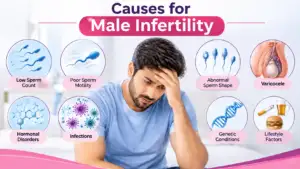
Male infertility is more prevalent than most people think. It has numerous causes, including medical, genetic, environmental, and lifestyle factors that affect sperm production, sperm function, and/or the reproductive tract. Based on the origin of the problem, male infertility is classified into three types:
i) Pretesticular Infertility
This refers to problems in the regulation of sperm production, which are the result of systemic and hormonal causes. If signals between the brain and pituitary gland are weak or irregular, testosterone and sperm production decrease.
1. Hormonal imbalances
- Hypogonadotropic Hypogonadism (HH): This is a condition where, due to a problem with the pituitary gland or hypothalamus, the testes in men (or ovaries in women) produce little or no sex hormones.
Usually, the hypothalamus produces gonadotropin-releasing hormone (GnRH). This hormone stimulates the pituitary gland to release Follicle-stimulating Hormone (FSH) and Luteinizing Hormone (LH). In men, these hormones stimulate the testicles to produce sperm and testosterone.
With HH, if any part of this hormone chain is disrupted, sperm and testosterone production are reduced, and fertility is affected.
- Increased prolactin levels: If there are high prolactin levels in the blood, the secretion of FSH and LH will be reduced. This, in turn, affects testicular function and decreases the production of testosterone and sperm. Low testosterone levels also result in reduced energy levels, muscle mass, blood count and sex drive.
- Tumours in the pituitary gland: A cancerous or non-cancerous pituitary tumour can lower LH and FSH levels, resulting in low sperm production or azoospermia (no sperm production).
- Hypothyroidism – This is when the thyroid glands do not produce enough thyroid hormone. When this occurs, Sertoli cells that nourish developing sperm will not function efficiently, affecting sperm production and maturation. It also increases prolactin levels, which affects spermatogenesis and testosterone production.
- Hyperthyroidism – In this condition, the thyroid glands secrete too much thyroid hormone. This reduces sperm concentration, impairs sperm motility, and causes abnormal sperm forms.
2. Genetic disorders
- Kallmann Syndrome – This condition is an inherited form of Hypogonadotropic Hypogonadism (HH) and is characterised by delayed or absent puberty. This occurs when the hypothalamus doesn’t make enough GnRH, so secondary sex characteristics that occur during puberty (e.g. facial & chest hair growth, deepening voice, growth spurt, etc.) don’t develop.
- Prader-Willi Syndrome – This condition is another form of hypogonadism. For men, the testes are underdeveloped, so they produce little or no sex hormones. This also leads to incomplete or delayed puberty.
3. Lifestyle factors
- Obesity – Excess body fat around the groin insulates the testicles and elevates their temperature, which negatively affects sperm production and quality. Fat also contains an enzyme called aromatase that converts testosterone to oestrogen.
- Tobacco use – Smoking or chewing tobacco increases the intake of cadmium. This compound is chemically similar to zinc, which is important in sperm production, and may replace it in DNA polymerase. This results in lower sperm count, impaired sperm motility and DNA damage.
- Alcohol consumption – High alcohol intake lowers the levels of testosterone, FSH and LH. It also raises estrogen levels, which decrease sperm production and can result in shrinking of the testes.
ii) Testicular Infertility
This type of infertility refers to any defects or disorders in the testes, where they are unable to produce healthy sperm effectively. Testicular causes are one of the most common causes of male infertility.
1. Medical causes
Health and medical causes are among the most significant causes of testicular infertility
- Varicocele – This is the most common and reversible cause of male infertility. This is the enlargement of the veins in the scrotum due to swelling. This causes a rise in the testicular temperature and reduces sperm production and quality.
- Testicular trauma – The testicles can absorb most injuries without serious damage. However, if the injuries are severe enough (e.g. kicks, vehicular accidents, etc.), it can cause a rupture, inflammation or displacement of the testicles.
- Chlamydia – The bacteria affects the epididymis, urethra, prostate, and Leydig cells of the testis. If left untreated, chlamydia can lead to a considerable decline in the motility and quality of sperm
- Mumps – This viral infection causes painful swelling of one or both testicles in men who are or have been affected. This swelling causes lower sperm count and motility.
- Gonorrhea – This STI also causes swelling or pain in the testicles. It can lead to epididymitis, and chronic inflammation can scar and block the sperm ducts.
- Mycoplasma – This bacterium is sexually transmitted and is largely asymptomatic. It latches onto the sperm cells, which in turn causes low motility.
- Tuberculosis (TB) – TB largely affects the lungs. However, the TB infection can move through the blood to the genital tract, epididymis, and prostate, which results in male infertility.
2. Genetic factors
- Klinefelter syndrome – This is the most common cause of male infertility due to genetics. This condition only affects men, where they have an extra X chromosome (47, XXY). It is one of the major causes of non-obstructive azoospermia.
- Y-chromosome microdeletions – In this condition, small sections of the Y chromosome are missing or deleted. Depending on where the deletions have occurred on the Y chromosome, it can result in azoospermia (lack of sperm in the semen) or oligospermia (low sperm count).
- Undescended testes – This is a birth defect where one or both testes don’t move to their proper place in the scrotum. The testes need an environment that is cooler than the rest of the body to properly function. When one or both are exposed to body temperature, it damages sperm-producing cells.
3. Environmental causes
- Exposure to industrial chemicals – Being around certain chemicals that are in pesticides, herbicides, organic solvents and painting products for a prolonged period of time can affect sperm count.
- Heavy metals – Heavy metals, such as lead, cadmium, arsenic, mercury, barium, etc., have a negative impact on men’s sperm and semen quality.
- Radiation – Exposure to radiation can negatively affect spermatogenesis and sperm morphology and cause permanent infertility.
4. Lifestyle factors
- Heat exposure to testicles – Sperm production is extremely sensitive to changes in temperature, and excessive heat can cause sperm cells to die. So, constant exposure to high levels of heat, in the form of saunas, resting your laptop on your lap for long periods of time, or wearing tight-fitting clothing, may lower sperm count for a time.
- Ageing – With age, there is a decline in sperm total, volume, motility, concentration, and DNA fragmentation.
- Recreational drugs – Marijuana, cocaine, opiates (narcotics), and methamphetamine can impair the hormonal balance and spermatogenesis, and cause lower sperm count and concentration.
- Anabolic steroids – These drugs are used by men who want to enhance their athletic performance and/or personal appearance. In cases of long-term or heavy abuse, they negatively affect hormonal balance, suppress spermatogenesis, cause testicular atrophy, and lead to male infertility
iii) Post-testicular Infertility
In this form of male infertility, the production of sperm may be completely normal and healthy, but the sperm is unable to be released during ejaculation. This occurs if the tubes that transport sperm are blocked, absent, scarred or damaged.
1. Medical causes:
- Previous surgeries – Certain surgeries can prevent the sperm from entering the ejaculate. These include: Vasectomy, prostate, scrotal and abdominal surgeries, and surgeries for testicular and rectal cancers, among others.
- Ejaculatory Duct Obstruction (EDO): A blockage where the ejaculatory ducts enter the urethra. It is often caused by cysts, stones, or inflammation.
- Retrograde ejaculation – In retrograde ejaculation, the ejaculate reaches the bladder instead of being expelled through the penis. Its causes include diabetes, spinal injuries, certain medications, or surgery affecting the bladder, prostate or urethra.
- Seminal infections – Bacterial infections of the seminal ducts or glands associated with the male reproductive tract can cause scarring and obstruction.
2. Genetic causes:
- Cystic fibrosis – This is an inherited condition that is known to affect the lungs and the pancreas. However, another feature of this condition is congenital bilateral absence of the vas deferens (CBAVD). This means men are born without the vas deferens, which pushes the mature sperm forward during ejaculation
Risk factors of Male Infertility
Infertility can happen to any male. However, there are certain factors where the risk of male infertility is higher than for others. These include:
- Family history: If you have a blood relative with a fertility condition, there is a high chance you were born with it, or may develop the condition in the future.
- Age and Weight: Men who are 40 years or older may take longer to conceive, and the risk of pregnancy loss increases with paternal age. Men who have a BMI greater than 25 are also at greater risk of infertility.
- Having sleep apnea: Sleeping poorly in general can affect sperm.
- Environments where you are constantly exposed to radiation, toxic heavy metals and/or high heat.
- Excessive use of substances like recreational drugs, alcohol, tobacco, etc.
- Taking certain medicines, including flutamide, spironolactone and bicalutamide.
- Having medical treatments, such as surgery or radiation, for treating cancer.
Male Infertility Symptoms
The most well-known symptom of male infertility is the lack of pregnancy after a year of regular and unprotected intercourse. Certain signs that may signal male infertility include:
- Pain, swelling, or a lump in the testicular area
- Low sex drive or erectile changes
- Decreased facial or body hair
- Unexplained weight gain and/or fatigue
- Differences in semen volume, texture, or force of ejaculation
If you are experiencing any of these symptoms, seek medical advice, as delaying can decrease your chances of having a child. Male infertility can also lead to many psychological and emotional symptoms, such as:
- Depresssion
- Loss
- Grief
- Inadequacy
- Failure
Male Infertility Diagnosis
A doctor will conduct a physical exam to check if any physical problems are causing male infertility. Then, they will review your health history in order to diagnose you with the condition. If neither of these reveals any apparent cause for infertility, certain tests will be conducted, such as:
- Semen analysis – This is a lab test that examines sperm volume, sperm concentration, total sperm count, sperm motility, pH level, sperm viscosity, etc.
- Blood tests – If the semen analysis reveals low or absent sperm, these tests measure your hormone levels to check for hormone deficiency, and they also help identify any genetic abnormalities.
- Imaging tests – Tests like ultrasound, Magnetic Resonance Imaging (MRI) and venogram are used to examine the testicles, blood vessels, and structures inside the scrotum.
- Urinalysis (urine test) – A urine test is used to diagnose STIs and diabetes.
- Testicular biopsy – A small sample of testicular tissue is examined to determine how well the testicles are producing sperm.
Can male infertility be treated?
Depending on the cause, male infertility treatment ranges from surgeries to ART (Assisted Reproductive Technology) for infertile men. These include:
1. Medical Treatment:
Medication is usually the first line of treatment, especially for less severe conditions:
- Hormone therapy – If hormone levels are too high or low, hormone replacement or medicines help regulate them.
2. Surgical interventions:
Surgical interventions for addressing male infertility include:
- Vasectomy reversal – If you’ve previously had a vasectomy to prevent sperm from entering your semen, a vasectomy reversal reconnects your vas deferens, which are repaired and reconnected to make pregnancy possible.
- Vasoepididymostomy – This procedure involves the surgical removal of blockages that have formed in the vas deferens or epididymis due to injuries, infections, etc., so that the sperm can enter the semen again.
- Varicocelectomy – To treat swelling of the varicose veins in the scrotum, this surgery removes these veins to help increase the chance of pregnancy.
- Sperm Retrieval – A Sperm Retrieval procedure extracts semen from the testicles. This procedure is helpful to men who are not able to ejaculate or produce any semen/sperm.
3. Assisted Reproductive Technology (ART):
When medical and surgical interventions fail, or the semen count and quality are too low for natural conception, ART procedures are utilised. These include:
- In-Vitro Fertilisation (IVF) – In this technique, the female partner’s eggs are collected, and medications are used to help them mature. Afterwards, the matured eggs are exposed to sperm in a culture dish.
Once fertilisation is completed, the fertilised egg/embryo develops and then implants in the woman’s uterus. If the embryo attaches to the uterus lining and starts growing, then a couple gets pregnant.
- Intracytoplasmic Sperm Injection (ICSI): In the process, the female partner’s eggs are collected, and a provider physically injects the sperm into an egg. After fertilisation occurs and an embryo develops, it is inserted into the female partner’s womb.
- Artificial Insemination: The male partner’s sperm is collected and prepared to obtain a high concentration of healthy sperm. When the female partner is nearing ovulation, this sample is placed in her uterus. These highly motile sperm can then make their way to the fallopian tubes to fertilise the egg.
Prevention of Male Infertility:
For those without genetic or health issues, you can reduce your risk of developing male infertility by:
- Improving your diet by avoiding or reducing your consumption of food rich in fats
- Not exposing your testicles to hot environments such as saunas, hot tubs or wearing tight clothing for long periods.
- Maintaining a healthy weight for you.
- Engaging in physical activities.
- Avoiding or stopping smoking and consumption of alcohol, anabolic steroids and recreational drugs.
- Developing strategies to manage stress, such as counselling, meditation, finding community, etc.
- For cancer patients, talk to your doctor about banking your sperm before going for any surgeries.
FAQs
1. Are women alone to blame for infertility?
No, women are not to blame for infertility. Due to a variety of health, genetic, and lifestyle causes, either sex can develop fertility issues.
2. Is male infertility reversible?
It depends on the cause. Certain fertility problems can be treated medically or surgically to make conception occur naturally; others, such as genetic causes, are irreversible.
3. What tests do men take to check for infertility?
A semen analysis is typically the first test. If it is abnormal, hormone tests, ultrasound, or genetic tests may be next.
4. Can certain medications affect male fertility?
Yes, some prescription medications such as chemotherapy drugs, certain antibiotics and high-dose anti-androgens can reduce sperm production or quality. Always consult your doctor before starting or stopping medication.
5. What is the difference between sterility and primary infertility?
Sterility means that a person is completely and permanently unable to father or conceive a child, whereas primary infertility refers to a person or a couple who has not conceived after a year of regular and unprotected intercourse. Primary infertility is often treatable and reversible.
6. Can fertility problems point to other health issues?
Yes, male infertility can sometimes signal underlying conditions such as diabetes, hormonal disorders or cardiovascular problems.

