

IVF Pregnancy vs Normal Pregnancy:Different, Myth and What to Expect
 By Chitra Shankar

An IVF pregnancy is not different from a natural pregnancy once the embryo implants, but it usually involves more monitoring in the first trimester and a few extra precautions. Many Indian couples are told to lie flat for weeks or to expect a C-section, and neither is a rule. Your infertility specialist in Chennai will tailor the plan to your history, age and the number of embryos transferred.
PSFC is a fertility centre in Chennai [add full clinic name and location], where fertility specialists and a clinical embryologist guide patients from treatment through early pregnancy. This guide explains what to expect and which advice you can safely ignore.
Medical review: Have this article medically reviewed and approved by Dr. Chitra Shankar MD (OG), MRCOG, DRM (Germany), FMAS, before publication.
Is an IVF pregnancy different from a normal pregnancy?
The baby develops in the same way and in the same place, inside your uterus. What changes is how pregnancy begins and how closely it is watched early on.
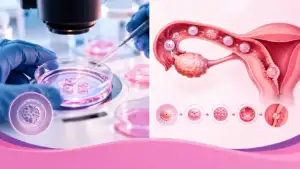
In IVF, eggs are collected, fertilised with sperm in the laboratory and grown for a few days, and then one (or sometimes more) embryo is transferred into the uterus. From the moment of implantation, the biology is the same. To understand how this compares for the child, read our guide on IVF baby vs normal baby. You can read how the full treatment works on our IVF treatment page.
How does an IVF pregnancy compare with a natural pregnancy?
| Aspect | IVF pregnancy | Natural pregnancy |
| How it starts | Embryo transfer after lab fertilisation | Conception in the fallopian tube |
| Confirmation | Blood hCG test, usually about 9 –14 days after transfer | Home urine test after a missed period |
| Hormone support | Progesterone (and sometimes estrogen) is commonly prescribed in early pregnancy | Usually not needed |
| First-trimester care | Earlier blood tests and an early scan | Routine scans |
| Chance of twins | Higher if more than one embryo is transferred | Low |
| After the first trimester | Usually routine antenatal care | Routine antenatal care |
| Birth planning | Based on obstetric factors | Based on obstetric factors |
Learn how IVF treatment works at PSFC
What happens during the two-week wait after embryo transfer?
The ‘two-week wait’ is the period between transfer and your pregnancy blood test. It is often the most stressful part of treatment. The exact timing depends on whether a day-3 embryo or a day-5 blastocyst was transferred, so follow your clinic’s instructions.
The PSFC two-week-wait guide
| Phase | What is happening | What you can do |
| Transfer day | A short, usually painless procedure | Rest briefly, then resume gentle routine activity as advised |
| First few days | The embryo is moving toward implantation | Take progesterone exactly as prescribed. Avoid heavy lifting. |
| Middle days | Implantation may occur. Mild cramps or light spotting can happen. | Stay hydrated, eat regular meals and report heavy bleeding |
| Days before the test | Hormone medicines can cause bloating and tenderness | Do not rely on symptoms. They cannot confirm pregnancy. |
| Test day | Blood hCG confirms pregnancy | Test at the time your clinic specifies, not earlier |
Testing at home too early can give a false negative or a confusing result, so wait for the blood test.
What are the early symptoms of an IVF pregnancy?
IVF pregnancy symptoms are the same as natural pregnancy symptoms: tiredness, breast tenderness, nausea, mood changes and bloating. The catch is that progesterone and other IVF medicines can cause the same effects even if you are not pregnant. This is why symptom-spotting during the two-week wait is unreliable. Only the hCG blood test and, later, a scan can confirm the pregnancy.
Do I need bed rest after embryo transfer?
No. Prolonged strict bed rest has not been shown to improve IVF success, and most clinics recommend normal light activity. A short rest on the day of transfer is common and reasonable.
Sensible guidance for the first weeks
- Walk and do light household work.
- Avoid heavy lifting, intense workouts and long, tiring journeys.
- Sleep well and stay hydrated.
- Follow your own doctor’s instructions if you have bleeding, a history of losses or a high-risk condition. In those cases your doctor may advise more rest.
Staying in bed all day will not help the embryo ‘stick’, and it can add to anxiety, constipation and low mood. If you have had earlier losses, read our guide on recurrent miscarriage causes and tests.
Is a C-section compulsory after IVF?
No. IVF is not, by itself, a medical reason for a C-section. The mode of delivery depends on factors such as the baby’s position, the placenta’s position, your health, the number of babies and any complications during pregnancy.
You may see higher C-section rates in some IVF groups. This often reflects other factors:
- Maternal age, because many IVF patients are older
- Twin or multiple pregnancies
- Conditions linked to infertility, such as PCOS, fibroids or endometriosis
- A long wait for the pregnancy or a history of loss, which can make parents and doctors prefer a planned delivery
Some studies suggest a slightly higher chance of placenta problems or high blood pressure in certain IVF pregnancies, which is one reason regular antenatal screening matters. Your obstetrician will decide the safest mode of delivery closer to term. A vaginal birth is possible after IVF when there is no other reason to avoid it.
Are twins and early birth more likely after IVF?
Twins are more likely when more than one embryo is transferred, and twin pregnancies carry added risks such as preterm birth. Single embryo transfer, where medically suitable, is encouraged for this reason. In the UK, the regulator (HFEA) data show the national multiple-birth rate fell from 24% in 2008 to 6% in 2019 as single embryo transfer became more common, while overall birth rates were maintained.
Even in single pregnancies, an expert panel reviewing IVF child-health data found that singleton IVF babies were more likely than naturally conceived babies to be born early or with a low birth weight. Part of this reflects the underlying fertility problem rather than the lab procedure. Research summarised by the Progress Educational Trust reports that women who took over a year to conceive had a higher preterm-birth risk than fertile women, and women who conceived through IVF had a higher risk still. Frozen embryo transfer appears to carry a lower risk of preterm birth and low birth weight than fresh transfer.
These are population averages. Most IVF pregnancies end in healthy, full-term babies, and your doctor can estimate your own risk. For the choice of embryo and technology, see our guide on AI in IVF and embryo selection.
What does antenatal care look like trimester by trimester?
| Stage | Typical care | Why it matters |
| Weeks 4–6 | hCG blood test, possibly a repeat hCG, progesterone support | Confirms pregnancy and its progress |
| Weeks 6–8 | First ultrasound | Confirms a heartbeat and the number of babies |
| Weeks 8–12 | Hormone support is usually continued, then tapered as your doctor advises | Supports early pregnancy until the placenta takes over |
| Weeks 11–13 | Nuchal translucency scan and first-trimester blood tests | Screens for chromosomal conditions |
| Weeks 18–20 | Detailed anomaly scan | Checks the baby’s anatomy |
| Weeks 24–28 | Gestational diabetes screening | More common with age, PCOS and obesity |
| Third trimester | Growth scans if advised, blood pressure checks | Monitors baby growth and maternal health |
Many couples move to their regular obstetrician after the first trimester, and PSFC can share your records to keep care seamless [confirm PSFC’s handover policy].
What should I do and avoid in early IVF pregnancy?
Do
- Take every medicine on time and never stop progesterone on your own.
- Eat a balanced diet and take folic acid as prescribed.
- Keep all scan and blood test appointments.
- Report symptoms early.
Avoid
- Unprescribed medicines, herbal products or ‘fertility tonics’
- Heavy lifting, high-impact exercise, and hot baths or saunas
- Smoking, alcohol and tobacco in any form
- Raw or unripe papaya and unpasteurised foods, which doctors commonly advise avoiding in pregnancy
Ask your doctor about travel, sexual activity and work. Advice varies by patient and by stage of pregnancy.
Which symptoms are normal, and which need urgent care?
The PSFC green-amber-red guide
| Level | Symptoms | What to do |
| Green (expected) | Mild cramps, tender breasts, tiredness, bloating, nausea, a little spotting that settles | Rest, hydrate, mention at your next visit |
| Amber (call the clinic the same day) | Spotting that continues, mild one-sided pain, vomiting that prevents you from eating, fever | Contact your doctor promptly |
| Red (go to emergency care) | Heavy bleeding, severe abdominal pain, fainting, shoulder-tip pain, breathlessness, rapid weight gain with severe bloating or very little urine | Seek emergency care immediately |
The red-flag group can signal ovarian hyperstimulation syndrome (OHSS) after a fresh cycle, or an ectopic pregnancy, both of which need urgent care.
How do I cope emotionally during an IVF pregnancy?
After a long fertility journey, early pregnancy can bring more anxiety than joy. This is common and understandable. Things that help:
- Share your worries with your doctor and write down questions before visits.
- Limit late-night searching and social media comparisons.
- Ask your partner to attend scans and appointments with you.
- Consider counselling if worry affects your sleep or daily life.
Remember that most IVF pregnancies are managed like any other. If you are still choosing a team, our checklist for the best fertility specialist in Chennai explains what to look for, and our IVF cost guide helps you plan. To understand your odds, read IVF vs natural pregnancy success rates by age. For planning a second child, see pregnant naturally after IVF, and if PCOS is part of your story, read our PCOS and pregnancy guide. More topics are on the PSFC pregnancy blog, including add anchor on your existing pregnancy care or IVF process post.
Meet the PSFC fertility specialists
Frequently Asked Questions
Is IVF pregnancy high risk? Not automatically. Some IVF pregnancies are watched more closely because of age, twins, PCOS or other conditions, and your doctor will tell you whether yours needs extra monitoring.
Is a C-section compulsory after IVF? No. IVF alone is not a reason for a C-section. The decision depends on your health, the baby’s position, the placenta’s position and other obstetric factors.
Do I need complete bed rest after embryo transfer? No. Strict bed rest has not been shown to improve success. Light normal activity is generally fine unless your doctor advises otherwise.
When can I take a pregnancy test after embryo transfer? A blood hCG test is usually done about 9–14 days after transfer, as your clinic instructs. Home tests taken earlier can be misleading.
Can I walk, climb stairs and travel after embryo transfer? Light walking and normal stairs are usually fine. Avoid long, tiring trips and heavy lifting, and ask your doctor about specific travel plans.
How long do I take progesterone after a positive test? Often through the first trimester, but the duration varies, so follow your doctor’s schedule and never stop it on your own.
Are IVF twins common? Twins are more likely if more than one embryo is transferred. Single embryo transfer reduces this risk.
Will my IVF baby be healthy? Most IVF babies are healthy, though there is a slightly higher chance of early birth and lower birth weight in some studies. Read more in our IVF baby vs normal baby guide.
