

Frozen Embryo Transfer (FET): Process, Success Rates & What to Expect
 By Pearl Editor
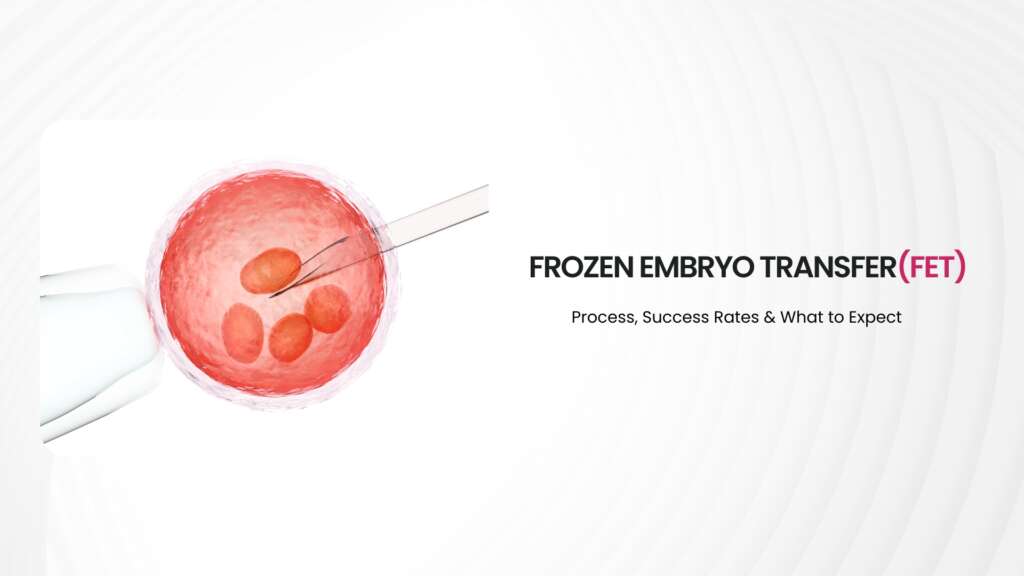
Introduction: Why Frozen Embryo Transfers Are Changing IVF
If you’re going through IVF, you may have heard that frozen embryo transfers (FET) have overtaken fresh transfers as the preferred approach at many leading fertility clinics. That’s not a coincidence — the science strongly supports it.
FET involves thawing a previously frozen embryo and transferring it into the uterus during a carefully prepared cycle. At PSFC OMR, Chennai, FET is a central part of our IVF protocols — and for good reason.
What Is a Frozen Embryo Transfer (FET)?
After an IVF egg retrieval, embryos may be cultured in the laboratory and frozen (vitrified) at the blastocyst stage (day 5–6) for later use. A frozen embryo transfer involves thawing one or more of these embryos and transferring them to the uterus when conditions are optimal.
Why FET Is Often Preferred Over Fresh Transfer
| Factor | Fresh Transfer | Frozen Embryo Transfer (FET) |
| Uterine environment | Affected by stimulation hormones | Fully recovered and receptive |
| OHSS risk | Higher | Significantly reduced |
| Timing flexibility | Must be timed with egg retrieval | Planned at optimal point in cycle |
| Allows PGT testing | No (not enough time) | Yes — embryos can be biopsied and tested |
| Success rates (per transfer) | Slightly lower in most cases | Equal or superior in most studies |
Types of FET Cycles
1. Natural Cycle FET
The embryo is transferred based on your natural ovulation timing, monitored via ultrasound and blood tests. No hormone medication is required — the body prepares the uterine lining naturally. Best for women with regular ovulatory cycles.
2. Medicated (Programmed) FET
Oestrogen is used to build the uterine lining, followed by progesterone to prepare the endometrium for implantation. The transfer is timed precisely to the progesterone start date. Most commonly used in India.
3. Stimulated Cycle FET
Mild stimulation with gonadotropins is used, and the embryo is transferred after natural ovulation occurs. Less common — used when neither natural nor medicated FET is appropriate.
The FET Process Step by Step
Step 1: Uterine Preparation (10–14 Days)
Depending on the protocol, you’ll take oestrogen tablets, patches, or injections to thicken the uterine lining. Regular monitoring via ultrasound and blood tests ensures the lining reaches at least 7–8 mm (ideal: 8–10 mm).
Step 2: Progesterone Start
Once the lining is ready, progesterone (in the form of suppositories, injections, or oral tablets) is started. The embryo transfer is scheduled 5 days after the start of progesterone for a day-5 blastocyst.
Step 3: Embryo Thawing
On the morning of the transfer, the embryologist thaws the embryo. Modern vitrification technology has survival rates exceeding 95% — the vast majority of frozen embryos survive the thaw.
Step 4: Embryo Transfer
The transfer itself is a simple, non-surgical procedure performed without anaesthesia. A fine catheter is guided through the cervix under ultrasound guidance to gently place the embryo into the uterine cavity. It takes 5–10 minutes.
Step 5: The Two-Week Wait
You’ll continue progesterone support for approximately 2 weeks. A pregnancy blood test (beta-hCG) is done 10–14 days after transfer.
FET Success Rates
| Age at Egg Retrieval | Approximate FET Success Rate (Live Birth) |
| Under 35 | 45–55% |
| 35–37 | 35–45% |
| 38–40 | 25–35% |
| 41–42 | 15–25% |
| 43+ | 5–15% |
💡 Tip: Using PGT-tested (euploid) embryos for FET significantly improves per-transfer success rates, particularly for women over 35.
After the Transfer: What to Expect
Most women can resume light daily activities immediately after FET. You may experience mild cramping, bloating, or spotting — all normal. Avoid strenuous exercise, alcohol, and smoking. Continue all prescribed medications as directed.
FET at PSFC OMR, Chennai
Our embryology team uses advanced vitrification protocols with >95% embryo survival rates. We work closely with each patient to choose the optimal FET protocol — natural, medicated, or stimulated — based on their specific cycle profile and history.
Conclusion
Frozen embryo transfer has become a cornerstone of modern IVF — offering safety, flexibility, and excellent success rates. Whether you’re using embryos from a previous IVF cycle, donor embryos, or PGT-tested blastocysts, FET gives your embryo the best possible start in the most receptive environment.
The best embryo transferred at the right time, in the right environment, gives the greatest chance of becoming the family you’ve been hoping for.
FAQs
Is FET more successful than a fresh transfer?
In most clinical studies and real-world data, FET achieves equal or better success rates than fresh transfers, especially when the uterine lining has fully recovered from stimulation.
How many FET cycles can I do?
Does the embryo thawing process damage the embryo?
Can I choose the sex of the embryo during FET?
